
Arsenic, Uranium, and Radon in Well Water
USGS says these come mainly from natural sources in rock. A well can have them with no pollution nearby, and only a test tells you. Start with a public lab near you. A mail-in lab kit is the backup when none runs the test you need.
What USGS found in private wells
- "In a study of 2,100 domestic wells, water pumped from about one in five wells contained one or more contaminants at a concentration greater than a human-health benchmark for drinking water." (USGS)
- The most common were metals, radionuclides, and nitrate, "all of these but nitrate are derived primarily from natural sources." (USGS)
Arsenic
- "Arsenic occurs naturally as a trace component in many rocks and sediments." (USGS)
- USGS says "dangerously high levels of arsenic have been found in drinking water wells in more than 25 states in the United States." (USGS)
- "Detections were more common and concentrations generally were higher in the west than in the east." (USGS) USGS also maps high-arsenic well use by county.
- Have a number? Arsenic results below reads it.
Arsenic results
EPA's limit for arsenic is 10 µg/L (10 ppb, or 0.01 mg/L), and its goal is zero, because drinking lower levels for many years can still raise the risk of cancer (EPA, Minnesota Department of Health). Over the limit, drink and cook with bottled water; showers, baths, and dishes are fine.
This week, switch to bottled water for drinking and cooking, and do not boil the water, which concentrates arsenic. Reverse osmosis or distillation can treat the water you drink, and Minnesota also lists adsorptive media, anion exchange, and oxidation filtration.
- "MDH highly recommends you take action if arsenic levels are above 10 µg/L." (Minnesota Department of Health)
- "Since your skin does not easily absorb arsenic, your water is safe for washing dishes and clothes, brushing teeth, showering, bathing, and watering plants (including vegetables)." (Minnesota Department of Health) Massachusetts sets a ceiling for that: "Unless your arsenic level is over 500 ppb, showering, bathing and other household uses are safe." (Massachusetts Department of Environmental Protection)
- "Remember that while some treatment systems can be useful for other purposes, systems such as conventional water softeners and activated carbon filters alone will not alone remove arsenic. Also, boiling the water will only concentrate the arsenic, due to evaporation of some of the water." (Minnesota Department of Health)
| Result | What it means |
|---|---|
| ND or <1 µg/L | Not found at the lab's reporting limit. Minnesota says a well with no arsenic in its first test is unlikely to have it later. |
| 0.003 mg/L (3 µg/L) | Under EPA's 10 µg/L, but found. Minnesota suggests treatment or other drinking water at any level. |
| 10 µg/L | At EPA's limit. Plan treatment for drinking and cooking water. |
| 25 µg/L | Over the limit. Drink and cook with bottled water until treatment is in. Showers and dishes are fine. |
| 600 µg/L | Over 500, the level Massachusetts gives for showering and other household uses. Ask your health department before bathing in it. |
Example numbers. EPA limit for public water systems, shown for reference. Private wells are not regulated.
None of the filters we link is certified for arsenic. Look for a reverse osmosis unit certified to NSF/ANSI 58 for arsenic, and check the certifier's own listing for that model. Minnesota also suggests having the treated water tested now and then to be sure the system works (Minnesota Department of Health). To compare treatment types, see which treatment removes what, and for programs that pay, help paying for water treatment. New to lab reports? How to read a water test report. Another number? Check it in the results checker.
Uranium and radium
- "Radionuclides occur naturally in many rocks and minerals." "The most common examples of radionuclides in groundwater are uranium, radium, and radon." (USGS)
- EPA's limits are 30 micrograms per liter for uranium and 5 pCi/L for radium 226 and 228 combined. (EPA) If you have a number, compare your uranium result with the limit.
Radon in water
- There is no federal limit for radon in drinking water. The results page explains why.
- EPA says, "Most of your risk from radon in water comes from radon released into the air when water is used for showering" and other household uses. (EPA Citizen's Guide to Radon)
- "Compared to radon entering the home through water, radon entering your home through the soil is usually a much larger risk." (EPA) So test the air first. Our sister site lists radon test kits near you.
- "If you've tested the air in your home and found a radon problem, and your water comes from a well, have your water tested." (EPA)
Where to test
Start with your health department. CDC says: "Contact your health department to find out what other germs or chemicals to test for based on where you live."1
The small commission from purchases made through these links helps keep this free public directory open, at no extra cost to you.
- Of the public programs we list, 81 test for arsenic, 12 for uranium, radium, or radioactivity, and 7 for radon. Search your town or ZIP code to see which ones serve you.
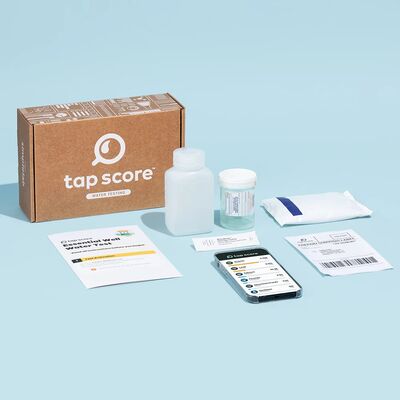
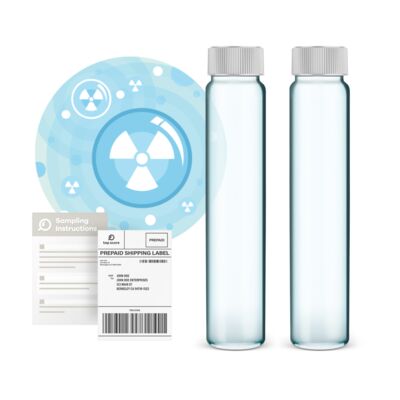


See how often to test for these, and if a result comes back high, which treatment removes them.
USGS and EPA pages checked October 2, 2026. Arsenic results guidance checked November 15, 2026.
Sources
Checked October 4, 2026.

By Bill Dahlstrom, 15 years in radon mitigation. His company has more than 700 five-star Google reviews. Health facts on this page come from the agencies linked here. About Bill. His water story